Engagement: The Core of Aviation Safety
Human factors account for up to 70% of aviation incidents, often due to disengaged safety cultures, per the Federal Aviation Administration.
Topics: 4-Safety Promotion
As aviation safety managers, ensuring the highest levels of safety is your top priority. While technological advancements have significantly improved aircraft reliability, human factors remain a leading cause of aviation incidents.
Pilot error, often tied to cognitive, physiological, or organizational issues, accounts for a substantial portion of accidents. This article explores actionable strategies to manage human factors effectively, reduce pilot error, and enhance overall aviation safety.
Topics: 4-Safety Promotion
For new aviation safety managers, preparing for Safety Management System (SMS) audits is a formidable challenge,
Topics: Aviation SMS Implementation, 4-Safety Promotion, 3-Safety Assurance, 1-Safety Policy, 2-Safety Risk Management, Risk Management Training
For new aviation safety managers, preparing for Safety Management System (SMS) audits can feel overwhelming, especially when it comes to coaching accountable executives. These senior leaders, often focused on operational and financial priorities, may not be familiar with the intricacies of SMS or their critical role in ensuring compliance. Yet, their understanding of regulatory frameworks like ICAO Annex 19, FAA SMS guidelines, and EASA SMS requirements is essential for fostering a robust safety culture and passing audits.
Topics: 4-Safety Promotion, 3-Safety Assurance, 1-Safety Policy, Risk Management Training, FAA Compliance, Safety Culture
For new aviation safety managers, preparing for a Safety Management System (SMS) audit can feel like navigating uncharted skies. A critical challenge is ensuring that accountable executives—senior leaders like CEOs, directors, or operations managers—understand and fulfill their SMS responsibilities.
These executives are pivotal in demonstrating compliance to regulators like the FAA, EASA, or ICAO, yet many lack the time or technical background to dive into the aviation SMS details.
Topics: Aviation SMS Implementation, 4-Safety Promotion, 3-Safety Assurance, 1-Safety Policy, 2-Safety Risk Management, FAA Compliance, Safety Culture
In aviation, where safety is paramount, a robust Safety Management System (SMS) is the cornerstone of risk management. For aviation safety managers and accountable executives—senior leaders responsible for SMS oversight—promoting SMS across an organization can be challenging, especially when training staff on complex concepts.
New safety managers often struggle to engage employees and foster a safety-first culture, while executives need practical ways to demonstrate leadership and compliance with standards set by the International Civil Aviation Organization (ICAO) and national authorities like the FAA or EASA.
Topics: 4-Safety Promotion
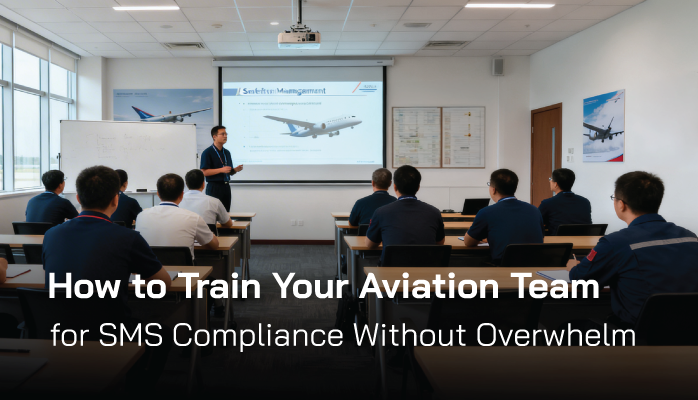
Training your aviation team for Safety Management System (SMS) compliance can feel like navigating a storm.
Topics: Aviation SMS Database, 4-Safety Promotion, Risk Management Software, Risk Management Training
A robust Safety Management System (SMS) is essential for managing risks and preventing incidents. For aviation safety managers and accountable executives—senior leaders responsible for SMS oversight—fostering a strong safety culture is a critical goal.
A Hazard Risk Register, a centralized tool for documenting and managing hazards, plays a pivotal role in achieving this by encouraging proactive hazard reporting, boosting staff engagement, and reinforcing a safety-first mindset.
Topics: 4-Safety Promotion, 2-Safety Risk Management, Risk Management Training, Safety Culture
For aviation safety managers, training employees on Safety Management System (SMS) concepts is a critical yet challenging task. Within the high-stakes environment of aviation safety risk management, ensuring that staff understand hazard reporting, risk management, and just culture is essential for preventing incidents and maintaining compliance with standards set by the International Civil Aviation Organization (ICAO) and national civil aviation authorities like the FAA or EASA.
New safety managers often struggle to know where to start, as these concepts can seem abstract or complex to frontline workers like pilots, ground crew, or maintenance staff.
Topics: 4-Safety Promotion, 2-Safety Risk Management, Risk Management Training
A robust Safety Management System (SMS) is the backbone of any organization striving to maintain operational excellence and protect lives.
For aviation safety managers and accountable executives, understanding the four pillars of SMS—Safety Policy, Safety Risk Management, Safety Assurance, and Safety Promotion—is critical to fostering a proactive safety culture and ensuring compliance with global standards like those set by the International Civil Aviation Organization (ICAO).
Topics: 4-Safety Promotion, 3-Safety Assurance, 1-Safety Policy, 2-Safety Risk Management
Site content provided by Northwest Data Solutions is meant for informational purposes only. Opinions presented here are not provided by any civil aviation authority or standards body.
These two on-demand videos offer:
Contact Info