Managing Human Factors
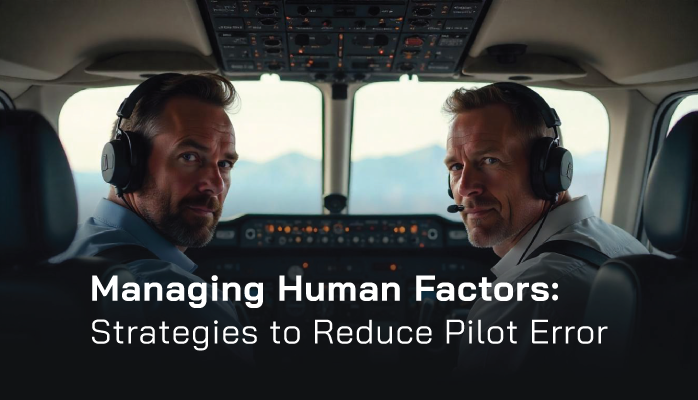
As aviation safety managers, ensuring the highest levels of safety is your top priority. While technological advancements have significantly improved aircraft reliability, human factors remain a leading cause of aviation incidents.
Pilot error, often tied to cognitive, physiological, or organizational issues, accounts for a substantial portion of accidents. This article explores actionable strategies to manage human factors effectively, reduce pilot error, and enhance overall aviation safety.
Understanding Human Factors in Aviation
Human factors encompass the psychological, physiological, and environmental elements that influence pilot performance. These include fatigue, stress, situational awareness, decision-making, and communication breakdowns. According to the National Transportation Safety Board (NTSB), human error contributes to approximately 70% of aviation accidents. By addressing these factors, safety managers can create a more resilient aviation system.
Related Human Factors Articles
- Let’s Talk Human Factors - Origin of Dirty Dozen
- Let’s Talk Human Factors - Lack of Communication
- Let’s Talk Human Factors: Distraction Is #4 of the Dirty Dozen
Why Human Factors Matter
Pilots operate in high-stakes environments where split-second decisions can mean the difference between safety and catastrophe. Factors like fatigue or poor crew resource management (CRM) can impair judgment, leading to errors. Safety managers must proactively mitigate these risks through training, policies, and cultural changes.

Key Strategies to Reduce Pilot Error

Here are evidence-based strategies to manage human factors and minimize pilot error:
1. Implement Robust Crew Resource Management (CRM) Training
CRM training focuses on improving teamwork, communication, and decision-making among flight crews. It equips pilots to handle high-pressure situations by fostering a collaborative cockpit environment.
-
Actionable Steps:
- Conduct regular CRM workshops that simulate real-world scenarios, such as adverse weather or equipment malfunctions.
- Emphasize non-technical skills like leadership, conflict resolution, and assertiveness.
- Use data from flight data monitoring (FDM) to tailor CRM training to specific operational challenges.
- Impact: Studies show that effective CRM reduces errors by improving situational awareness and crew coordination. For example, the 1989 United Airlines Flight 232 incident highlighted how CRM saved lives despite catastrophic system failures.
2. Address Pilot Fatigue
Fatigue is a major contributor to pilot error, impairing cognitive functions like memory and reaction time. The Federal Aviation Administration (FAA) recognizes fatigue as a critical safety issue and enforces duty time regulations.
-
Actionable Steps:
- Develop fatigue risk management systems (FRMS) to monitor and mitigate fatigue risks.
- Encourage pilots to report fatigue without fear of repercussions.
- Optimize scheduling to ensure adequate rest periods, especially for long-haul flights.
- Impact: A 2017 study by the International Civil Aviation Organization (ICAO) found that FRMS reduced fatigue-related incidents by 20% in participating airlines.
Related Fatigue Risk Management Articles
- 3 Ways for Dealing With Fatigue Risk Management in Aviation SMS
- How to Best Monitor Fatigue in Your Aviation SMS
- Winter Fatigue Hazard Register Review - Aviation SMS SRM & SA Example
3. Enhance Situational Awareness Through Training and Technology
Loss of situational awareness can lead to critical errors, such as controlled flight into terrain (CFIT). Training and technology can help pilots maintain a clear understanding of their environment.
-
Actionable Steps:
- Use advanced flight simulators to train pilots in recognizing and recovering from situational awareness breakdowns.
- Integrate technologies like Enhanced Ground Proximity Warning Systems (EGPWS) and Traffic Collision Avoidance Systems (TCAS).
- Promote a culture of proactive monitoring, where pilots cross-check each other’s actions.
- Impact: The introduction of EGPWS has reduced CFIT accidents by over 50% since the 1990s, according to ICAO data.
4. Foster a Just Culture
A just culture encourages pilots to report errors or near-misses without fear of punishment, enabling organizations to learn from mistakes. Punitive cultures discourage reporting, leaving systemic issues unaddressed.
- Actionable Steps:
- Establish confidential reporting systems, such as the Aviation Safety Reporting System (ASRS).
- Train managers to focus on systemic causes of errors rather than individual blame.
- Share lessons learned from incident reports to improve processes, such as in SMS Pro's Lessons Learned Library.
- Impact: Airlines with strong just cultures see higher reporting rates, leading to proactive safety improvements. For instance, Qantas Airways’ safety culture has been credited with its exemplary safety record.

5. Leverage Data-Driven Safety Management Systems (SMS)

Safety Management Systems integrate data from various sources, such as FDM and incident reports, to identify trends and risks. By analyzing this data, safety managers can address human factors before they lead to accidents.
- Actionable Steps:
- Use predictive analytics to identify patterns, such as frequent errors during specific flight phases.
- Regularly review SMS data to update training programs and operational procedures.
- Engage pilots in SMS feedback loops to ensure their insights shape safety policies.
- Impact: The FAA reports that SMS implementation has reduced accident rates by 15% in airlines that fully adopt the system.
6. Promote Mental Health and Stress Management
Mental health challenges, such as anxiety or depression, can impair pilot performance. Stigma often prevents pilots from seeking help, making proactive support essential.
- Actionable Steps:
- Provide access to confidential mental health resources, such as counseling services.
- Train pilots in stress management techniques, like mindfulness or cognitive behavioral strategies.
- Normalize discussions about mental health within the aviation community.
- Impact: Programs like the FAA’s Human Intervention Motivation Study (HIMS) have successfully supported pilots in managing mental health, reducing error rates.
Building a Safety-First Culture
Reducing pilot error requires a holistic approach that combines training, technology, and cultural change. Safety managers must lead by example, prioritizing human factors in every aspect of operations. By fostering a culture of continuous improvement, you can empower pilots to perform at their best.
Related Articles on Continuous Improvement for Aviation SMS
- FAA Part 5 Compliance | Safety Assurance Continuous Improvement
- What Continuous Improvement Compliance Looks Like in Real SMS
- How to Be Compliant With Continuous Improvement of SMS
Key Takeaways for Aviation Safety Managers
- Invest in CRM and simulator training to enhance teamwork and situational awareness.
- Mitigate fatigue through FRMS and optimized scheduling.
- Use technology like EGPWS and TCAS to support pilots in complex environments.
- Foster a just culture to encourage error reporting and learning.
- Leverage SMS data to proactively address risks.
- Support pilot mental health to reduce stress-related errors.
Conclusion
Managing human factors is a critical responsibility for aviation safety managers. By implementing these strategies, you can reduce pilot error, enhance safety, and protect lives. Stay proactive, embrace data-driven solutions, and cultivate a culture where safety comes first. Your leadership can make the skies safer for everyone.
Call to Action
Ready to strengthen your safety program? Start by auditing your current human factors initiatives and identifying gaps. Engage your team in CRM training, review your SMS data, and prioritize pilot well-being. SMS Pro is here to help! Together, we can build a safer aviation industry.