
Aviation Safety Audits: Here to Stay
Another aviation safety audit for your safety management system (SMS)...
The safety auditors are coming with established guidelines from:


Another aviation safety audit for your safety management system (SMS)...
The safety auditors are coming with established guidelines from:
Topics: 3-Safety Assurance

Aviation service providers should be aware of what level of risk is and isn’t acceptable. In other words, when you perform a risk assessment on a safety concern,
Topics: 1-Safety Policy
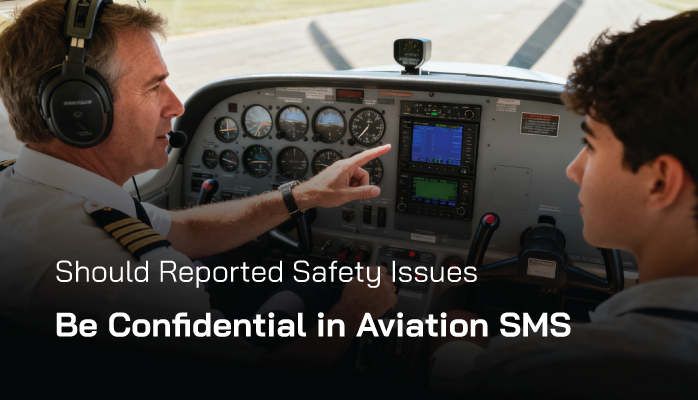
Confidentiality in aviation SMS is how much personal information is included in available safety reports and concerns.
Topics: Safety Culture
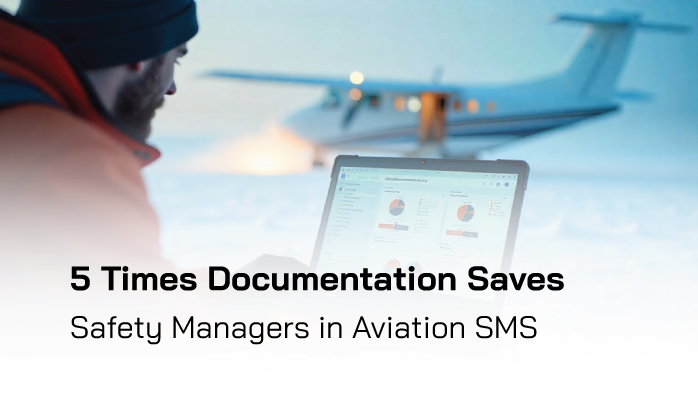
Let’s be real – documentation is really just a fancy word for paperwork (digital or hard copy). It can be extremely tedious.
Topics: 1-Safety Policy

Risk analysis is a vital component of aviation Safety Management Systems (SMS), enabling safety managers to systematically identify, assess, and mitigate issues that could compromise safety.
According to the Federal Aviation Administration, unaddressed risks contribute to 70% of aviation incidents, resulting in $1.2 billion in annual losses industry-wide, as reported by IATA.
Topics: 3-Safety Assurance

A mature, effective aviation safety management system (SMS) will always incorporate imaginative ways to stimulate teamwork and good communication between employees.
It’s a tricky area though because teamwork and communication are beset by:
Topics: 4-Safety Promotion, Safety Culture
You know the old expression: it only takes one to poison the well.
We end up writing a lot about resistance to change in aviation safety management systems (SMS) because it’s something many aviation safety managers consistently deal with.
Topics: 3-Safety Assurance

The term risk mitigation, broadly speaking, means to try and prevent danger. You might think of it as “reducing exposure.”
Risk management tools in aviation SMS is simply a vague term that refers to resources that can help you manage risk.

Risk tolerance is simply how much risk you are willing to accept. High-risk tolerance is generally not a good idea
Topics: 3-Safety Assurance

These two on-demand videos offer: