
CEO Commitment to Safety
Training staff on Safety Management System (SMS) concepts can be a daunting task for new aviation safety managers, especially when guiding accountable executives—senior leaders responsible for SMS oversight.

Training staff on Safety Management System (SMS) concepts can be a daunting task for new aviation safety managers, especially when guiding accountable executives—senior leaders responsible for SMS oversight.
Topics: 4-Safety Promotion, 3-Safety Assurance, 1-Safety Policy, Risk Management Training, FAA Compliance, Safety Culture
SMS Pro is a comprehensive SMS database tailored for aviation service providers, including airlines, airports, maintenance organizations, flight schools, and more.
Topics: 4-Safety Promotion, 3-Safety Assurance, Risk Management Software, 1-Safety Policy, 2-Safety Risk Management, FAA Compliance
The Federal Aviation Administration’s (FAA) safety risk management (SRM) compliance requirement for System Description has one clear goal:
Topics: 2-Safety Risk Management, FAA Compliance
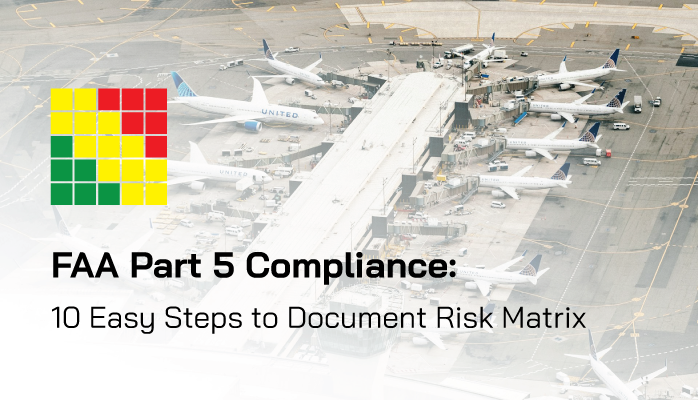
For new aviation safety managers, documenting the risk matrix process within a Safety Management System (SMS) can be a challenging task.
Topics: Aviation SMS Implementation, 2-Safety Risk Management, Risk Management Training, FAA Compliance
As an aviation safety manager or accountable executive, preparing for an FAA Part 5 Safety Management System (SMS) audit is critical to ensuring compliance and maintaining a robust safety culture.
Topics: 4-Safety Promotion, 3-Safety Assurance, 1-Safety Policy, 2-Safety Risk Management, FAA Compliance

As an aviation safety manager or accountable executive, ensuring compliance with the Federal Aviation Administration’s (FAA) Safety Management System (SMS) requirements under 14 CFR Part 5 is critical to maintaining operational safety and regulatory adherence.
Topics: Risk Management Training, FAA Compliance
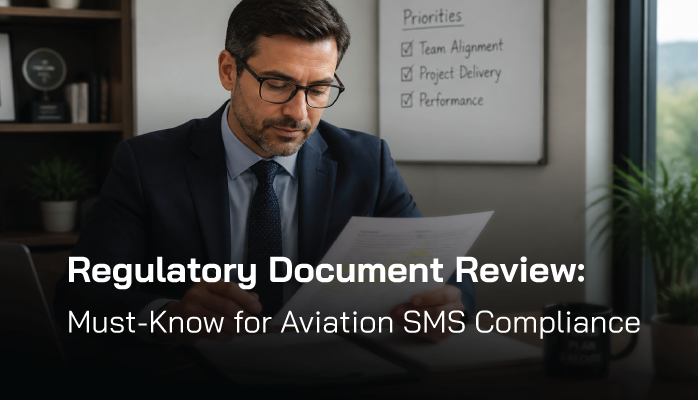
As a new aviation safety manager, stepping into the complex world of aviation Safety Management Systems (SMS) can feel overwhelming.
Topics: 3-Safety Assurance, 2-Safety Risk Management, FAA Compliance

In the changing world of aviation regulations, safety remains non-negotiable. A robust Safety Management System (SMS) has become the backbone of any organization striving to mitigate risks and ensure compliance with regulatory standards,
Topics: 4-Safety Promotion, 1-Safety Policy, 2-Safety Risk Management, Risk Management Training, FAA Compliance, Safety Culture

As a Canadian Maintenance, Repair, and Overhaul (MRO) organization with 100 employees, serving both Canadian and U.S. customers,
Topics: Aviation SMS Implementation, Aviation SMS Database, Risk Management Software, FAA Compliance
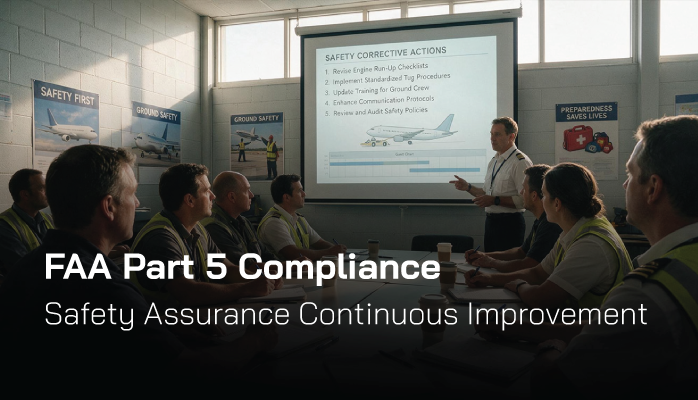
In every aviation safety management system (SMS), the accountable executive is responsible for ensuring the SMS is properly implemented and performing in all areas of the organization.
Topics: 3-Safety Assurance, FAA Compliance

These two on-demand videos offer: