
How to Implement an ICAO-Aligned FRMS
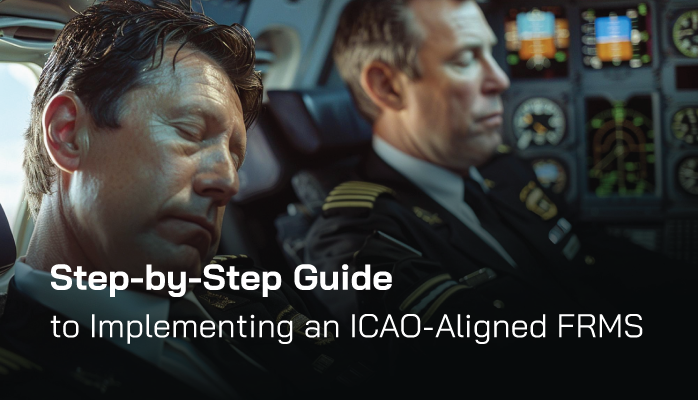
Fatigue is a critical risk in aviation, impacting crew performance and safety across airlines, airports, maintenance organizations, and flight schools. A Fatigue Risk Management System (FRMS) is essential for mitigating these risks while ensuring compliance with International Civil Aviation Organization (ICAO) standards.
In this guide, we’ll walk safety professionals through implementing an ICAO-aligned FRMS.
We'll include tools using SMS Pro, the leading safety management software trusted by over 450 aviation organizations. With SMS Pro’s affordable FRMS tools, available at aerospacesafetysoftware.com, you can achieve best-in-class safety outcomes. Let’s dive into the process!
Why SMS Pro Is the Best Choice for FRMS Implementation
SMS Pro, developed by Northwest Data Solutions, is an ICAO-compliant safety management system (SMS) platform with integrated FRMS capabilities. Its intuitive design, advanced analytics, and aviation-specific features—such as automated hazard reporting workflow notifications and predictive risk modeling—make it ideal for managing fatigue. Unlike generic tools, SMS Pro’s FRMS modules streamlines compliance, enhances safety, and scales to any operation, from global airlines to regional flight schools. Discover how SMS Pro transforms fatigue management with this step-by-step guide.
Step-by-Step Process to Implement an FRMS With SMS Pro
Implementing an FRMS aligns with ICAO’s four pillars: Safety Policy, Safety Risk Management, Safety Assurance, and Safety Promotion. SMS Pro simplifies each step, empowering safety professionals to build a data-driven FRMS. Below, we outline the process with real-world examples from diverse aviation sectors.
Step 1: Conduct a Gap Analysis
Start by assessing your current fatigue management practices against ICAO FRMS standards. Identify gaps in hazard identification, risk assessment, mitigation, and training to create a roadmap for improvement.
Our regional airline operates short-haul flights in the Middle East. Using SMS Pro’s gap analysis module, we evaluated our practices:
- Hazard Identification: No formal fatigue reporting system; crew used ad-hoc complaints.
- Risk Assessment: Lacked bio-mathematical tools to predict fatigue risks.
- Mitigation: Basic roster rules without optimized rest periods.
- Training: No fatigue education for crew or schedulers.
Outcome: We needed a digital reporting portal and analytics, both provided by SMS Pro’s FRMS tools.
Step 2: Develop an FRMS Policy and Manual
Create a clear FRMS policy, endorsed by leadership, to demonstrate commitment to fatigue management. Document procedures in an FRMS manual covering safety risk management, safety assurance, and safety promotion.
- Policy: Assign roles for safety managers, crew, and schedulers.
- Risk Management: Define processes for identifying, assessing, and mitigating fatigue hazards.
- Safety Assurance: Set metrics to monitor FRMS performance.
- Safety Promotion: Plan training and communication for a fatigue-aware culture.
Our offshore helicopter service operates irregular schedules. Using SMS Pro’s Policies & Procedure Manager module, we built an FRMS manual that was easy to communicate to all employees and document their acknowledgement of having read the document using Message Board's read and sign capabilities:
- Policy: “All personnel must report fatigue without fear of reprisal.”
- Hazard Identification: A mobile app for fatigue reports, integrated with SMS Pro's tailored notification routing protocols.
- Mitigation: Rosters adjusted for 10-hour rest after night flights.
- Training: Online fatigue training via SMS Pro’s learning management system.
Step 3: Build a Safety Case

Develop a safety case to prove your FRMS maintains or improves safety compared to prescriptive rules. Include operational context, risk assessments, mitigations, and data.
For our trans-Pacific routes (e.g., Tokyo to New York), we proposed extended duty periods:
- Context: Four-pilot crew, onboard rest facilities.
- Hazards: Circadian disruption from overnight flights.
- Mitigations: In-flight rest rotations, pre-flight sleep optimization, and 48-hour recovery periods.
- Data: SMS Pro’s analytics processed 3 months of trial data, using SAFTE-FAST modeling to confirm safe alertness levels.
The safety case, created using SMS Pro's templated Safety Case Manager, impressed our regulator with clear visualizations.
Step 4: Engage Stakeholders
Secure buy-in from crew, schedulers, and management through workshops, surveys, and transparent communication.
Our cargo airline faced crew resistance to new rosters. SMS Pro’s tools helped us:
- Host virtual town halls using Meeting Manager module, logged in SMS Pro’s audit trail of past safety meetings.
- Collect feedback via SMS Pro’s safety survey module, leading to roster tweaks (e.g., no consecutive night shifts).
- Launch a non-punitive fatigue reporting portal in SMS Pro, increasing reports by 65%.
Step 5: Trial and Collect Data
Run a trial to validate your FRMS, collecting data on fatigue reports, roster compliance, and performance to refine your system.
Our flight school trialed an FRMS for 6 months with SMS Pro:
- Data Sources: Instructor fatigue reports, schedules aberrations, and wearable sleep tracker data anomalies, all managed in SMS Pro.
- Findings: 12% fewer fatigue-related scheduling issues; instructors reported improved rest.
- Adjustments: Limited consecutive training sessions, enforced by SMS Pro’s automated hazard trending alerts.
Step 6: Submit to Your Regulator
In some jurisdictions, you may be required to submit your FRMS manual, safety case, and trial data to your civil aviation authority, ensuring alignment with ICAO and local regulations.
Our airport’s ground handling team sought FRMS approval for extended shifts during peak seasons:
- Submitted an FRMS manual, safety case, and trial data using SMS Pro’s export features.
- Included fatigue reports and mitigation outcomes, visualized with SMS Pro’s dashboards.
- Received conditional approval for a 12-month FRMS, with SMS Pro facilitating quarterly reporting.
Step 7: Implement and Monitor
Roll out your FRMS, integrating it into your SMS. Use SMS Pro for ongoing monitoring and continuous improvement.
- Monitoring Tools: Fatigue reporting app, bio-mathematical models, and safety performance indicators (SPIs).
- Reviews: Quarterly audits via SMS Pro’s audit module.
- Updates: Adjust mitigations based on data (e.g., enhanced rest facilities).
Post-implementation, we track:
- SPIs: Fatigue reports per 1,000 work hours (target: <4).
- Data: 98% roster compliance; 85% training completion, all tracked in SMS Pro.
- Actions: Added fatigue awareness campaigns, managed through SMS Pro’s safety communication tools.
Overcoming Common FRMS Challenges With SMS Pro
- Challenge: Limited fatigue modeling expertise.
Solution: SMS Pro integrates with tools like SAFTE-FAST for predictive analytics. - Challenge: Crew reluctance to report fatigue.
Solution: SMS Pro’s non-punitive reporting portal encourages participation. - Challenge: Regulatory compliance.
Solution: SMS Pro’s ICAO-aligned templates ensure seamless submissions.
Benefits of Using SMS Pro for FRMS
- Enhanced Safety: Proactive fatigue management reduces incident risks.
- Operational Flexibility: Tailored rosters optimize efficiency.
- Crew Well-Being: Improved rest and training boost morale.
- Global Compliance: ICAO alignment supports international operations.
- Efficiency: SMS Pro automates reporting, analytics, and audits, saving time.
Conclusion: Elevate Your Safety Program With SMS Pro
Implementing an ICAO-aligned FRMS is a game-changer for aviation safety, and SMS Pro makes it achievable for any organization. From gap analysis to regulatory submission, SMS Pro’s powerful tools streamline every step, delivering data-driven insights and compliance with ease. Start your FRMS journey today and transform your safety program!